Teaching Courses
- Computer Network
- Network Administration
- Network Security
- Malware Analysis
- Network Pentest
Teaching Statement
I believe students learn most deeply when they are not only introduced to ideas, but also given opportunities to use them, question them, test them, and reflect on what they discover. My teaching therefore centers on active learning, guided experimentation, and the gradual development of independence. I want students to leave a course with more than a collection of correct answers. I want them to become confident learners who can approach unfamiliar problems with curiosity, discipline, and sound judgment.
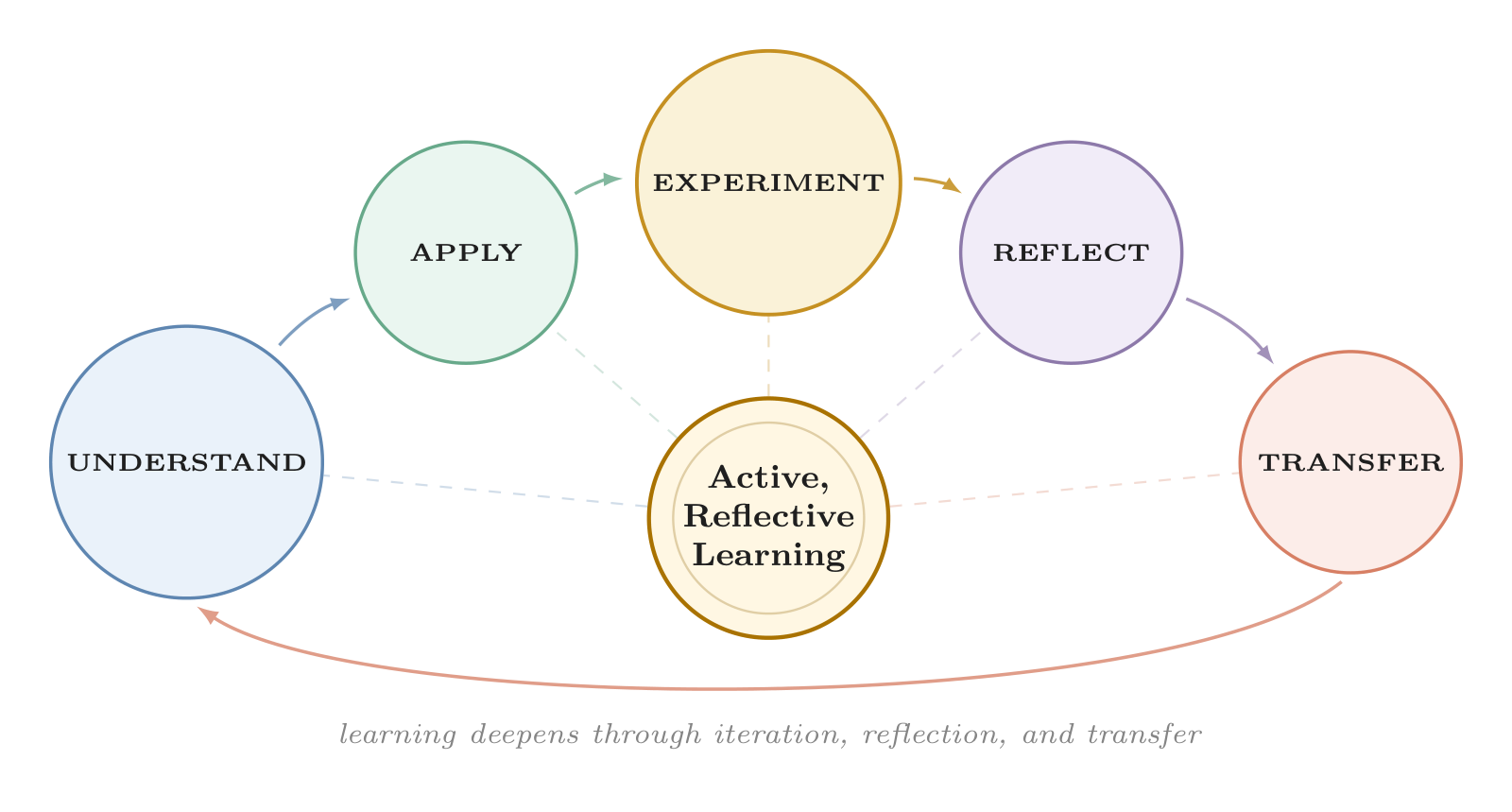
Learning becomes durable through engagement.
Foundational knowledge matters, but understanding becomes more meaningful when students actively work with ideas. I therefore try to create learning experiences that ask students to apply concepts, make decisions, compare alternatives, and explain their reasoning. Depending on the course, this may take the form of a hands-on activity, a case, a simulation, a design problem, an analysis task, or an open-ended discussion. The format can change; the principle does not. Students learn more when they participate in constructing understanding rather than only receiving it.
Experimentation is part of learning.
Some of the most valuable learning occurs when an expected result does not appear. I want students to feel comfortable testing an approach, encountering uncertainty, revising an assumption, and trying again. For me, a productive experiment is not simply an exercise with a predetermined answer; it is an opportunity to connect theory with experience and to develop judgment. This is especially important in applied and technical education, but the broader habit is universal: ask a meaningful question, examine evidence, learn from the result, and improve the next attempt.
Scaffolding should lead to independence.
Students arrive with different preparation, confidence, and ways of learning. Effective teaching therefore requires both challenge and support. I provide clear expectations, carefully chosen examples and resources, and staged activities that help students establish a foundation before moving toward more independent work. As their confidence grows, I gradually reduce that structure. My goal is not to make difficult work easy, but to give students an entry point from which they can eventually take ownership of difficult work themselves.
Reflection turns activity into transferable learning.
I encourage students to ask not only whether an answer worked, but why it worked, what assumptions shaped their decisions, and what they would change next time. That reflection helps students carry knowledge beyond the immediate assignment. It also shapes assessment: I value a student’s ability to explain a process, defend a choice, and learn from evidence rather than merely reproduce a result. The deeper objective is transfer: the ability to use what was learned in a new and less familiar context.
Teaching should evolve as learning evolves.
My own teaching has changed through experience, student feedback, peer feedback, and reflection. I have become more deliberate about pacing, clarity, the amount of information introduced at one time, and the balance between guidance and independence. I continue to adjust examples, explanations, activities, and opportunities for practice when students show me that a different path would help them learn more effectively. I see teaching as an ongoing practice of inquiry and improvement. Ultimately, my responsibility is to help students develop not only knowledge, but also the confidence, habits of mind, and independence to continue learning after the course is over.